
How to Make Sure Your Contractor Is Insured in North Carolina
If you are planning a renovation, preparing your home for sale, or deciding whether to repair or sell as is, one of the biggest risks is hiring the wrong contractor. That risk gets even bigger when the contractor is not properly insured.
In Ballantyne and nearby areas, we see homeowners spend money on updates for downsizing, aging in place, or getting a home ready for the market. But when something goes wrong on a project, it is not just frustrating. It can become expensive fast. The right insurance coverage helps protect you if there is property damage, an injury on site, or a dispute about the work.
This guide helps you confirm coverage before work begins, whether you plan to renovate and list with an agent or sell the home as is.
Why contractor insurance matters
If your contractor is uninsured or underinsured, you could be exposed to:
- Paying for repairs if the contractor causes accidental property damage
- Injury claims if a worker gets hurt on your property
- Delays and disputes that leave the job unfinished
- Paying twice if work has to be corrected or redone
Even smaller projects can create serious risk. Plumbing, electrical work, roof repairs, removing walls, and water intrusion issues are some of the most common areas where mistakes get costly.
Bonded vs insured, what those words actually mean
You will often hear contractors say they are “bonded and insured,” but those are not the same thing.
What a bond generally protects
A bond is designed to protect you if the contractor does not complete the job or does poor quality work and fails to correct it. It is not a replacement for insurance, and it does not cover every situation, but it can add a layer of protection.
What insurance generally protects
Insurance is about accidents and liability. The most common policies can cover damage to your home caused during the project and certain claims that may arise if something goes wrong.
The coverage types to ask about
You do not need to become an insurance expert. You simply need to ask for proof and make sure it matches the type of work being done.
- General liability insurance: Helps cover certain property damage and liability claims related to the project.
- Workers compensation coverage: Relates to injuries to the contractor’s employees. If a worker is injured and there is no coverage, homeowners can get pulled into a stressful situation.
- Coverage limits that match your home: A policy can exist and still be too small. If your home value is higher than average, it is worth confirming the coverage limit is appropriate for the risk.
Tip for Ballantyne homeowners: If you are preparing for downsizing and making updates before listing, contractor delays can disrupt your move timeline and add carrying costs. Confirming insurance and setting clear milestones can prevent surprises.
How to confirm your contractor is insured
Use this checklist before signing anything or paying a deposit.
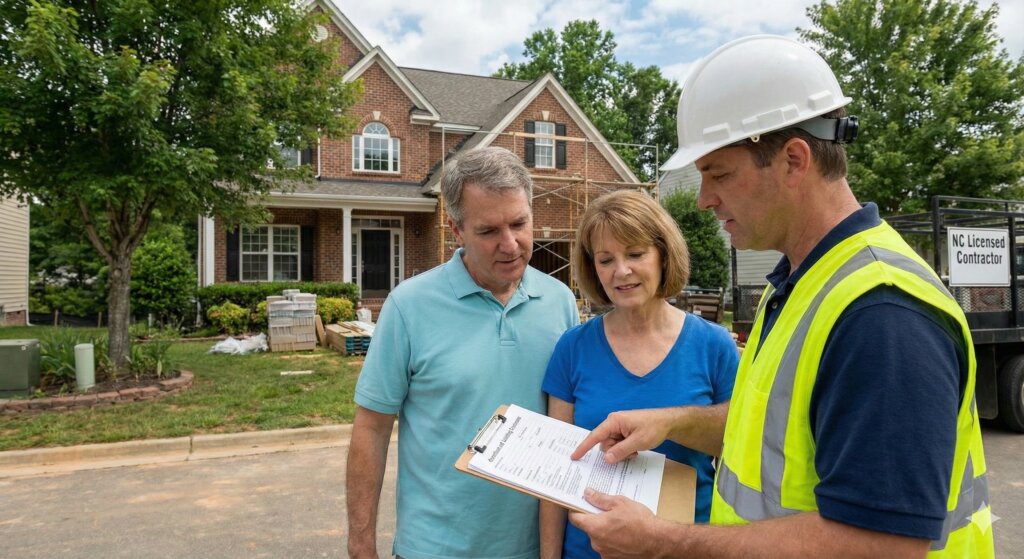
1. Ask for a Certificate of Insurance
Request a current Certificate of Insurance that shows the policy types, coverage limits, effective dates, and the insurance carrier.
2. Verify the policy with the insurance provider
Do not rely on a screenshot or a text message. Call the insurance agency listed on the certificate and confirm the policy is active and current.
3. Get the scope and protections in writing
Your contract should clearly state:
- Detailed scope of work and materials
- Who is supplying materials
- Start date and estimated completion date
- Payment schedule tied to milestones, not just calendar dates
- How change orders are handled
- What happens if timelines slip
- Warranty details and how issues are corrected
Subcontractors are where many homeowners get surprised
Even if your general contractor is insured, you also want to know how they handle subcontractors. Some trades are commonly subcontracted, such as framing, roofing, brickwork, plumbing, and electrical.
Ask these questions:
- Are subcontractors being used for any part of this job?
- Are they covered under the contractor’s policy, or do they carry their own insurance?
- Can you provide proof of insurance for subcontractors before they start?
This matters because if subcontractors are brought in without proper documentation and something goes wrong, sorting out responsibility can become complicated quickly.
North Carolina resources to verify credentials and complaints
In addition to insurance, it is smart to verify licensing and look for complaints. Here are helpful North Carolina resources you can link to:
- North Carolina Licensing Board for General Contractors: Verify if a general contractor is licensed and in good standing.
- North Carolina Secretary of State Business Search: Confirm the business is registered and view company details.
- North Carolina Department of Insurance: General consumer guidance and insurance related resources.
- Better Business Bureau: Check complaints, ratings, and customer reviews.
- Your local city or county permitting office: Confirm whether permits are required for the specific work being done and how inspections are scheduled.
Note: Licensing requirements vary by trade. A general contractor may be licensed, while certain subcontractors may follow different licensing rules depending on the scope of work.
Renovate and list, or sell as is, both can be smart
If you are updating your home to sell, especially if you are downsizing from Ballantyne to a smaller home or a 55 plus community, it is easy to over improve or take on projects that create more risk than return.
In many cases, smaller improvements that reduce buyer objections and improve safety can be a better strategy than a major renovation. If the home needs significant repairs or the timeline feels overwhelming, selling as is may be the simpler option.
Need help comparing your options?
If you are feeling stuck between renovating and selling, we can help you evaluate the best next step. Whether you want to talk through repair priorities before listing with an agent or explore selling as is, we will help you understand your options.
Call or text JMS Home Buyers LLC
704 707 6016
Or fill out the contact form on this page to get in touch.