
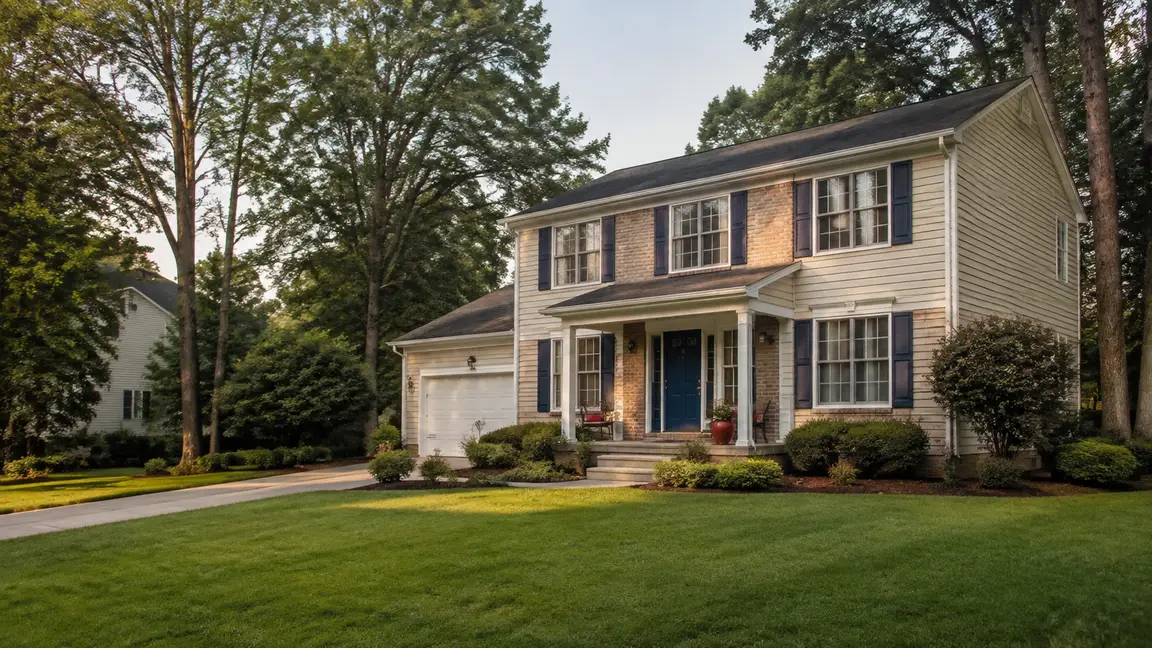

When a home listing expires, the next step is not automatically to lower the price and put it back on the market.
When a home listing expires, the next step is not automatically to lower the price and put it back on the market.
Your circumstances may have changed. The market may have changed. You may be willing to try showings again, or you may be ready for a simpler option. Before signing another listing agreement or accepting a cash offer, take time to decide what matters most now.
An expired listing decision checklist is a step-by-step tool that helps homeowners compare relisting, making selected improvements, selling as-is, requesting a direct offer, or pausing after a home listing expires.
For homeowners in Ballantyne and the surrounding Charlotte area, the right next step depends on the home’s condition, its current competition, the likely net proceeds, your timeline, and how much work and uncertainty you are willing to accept.
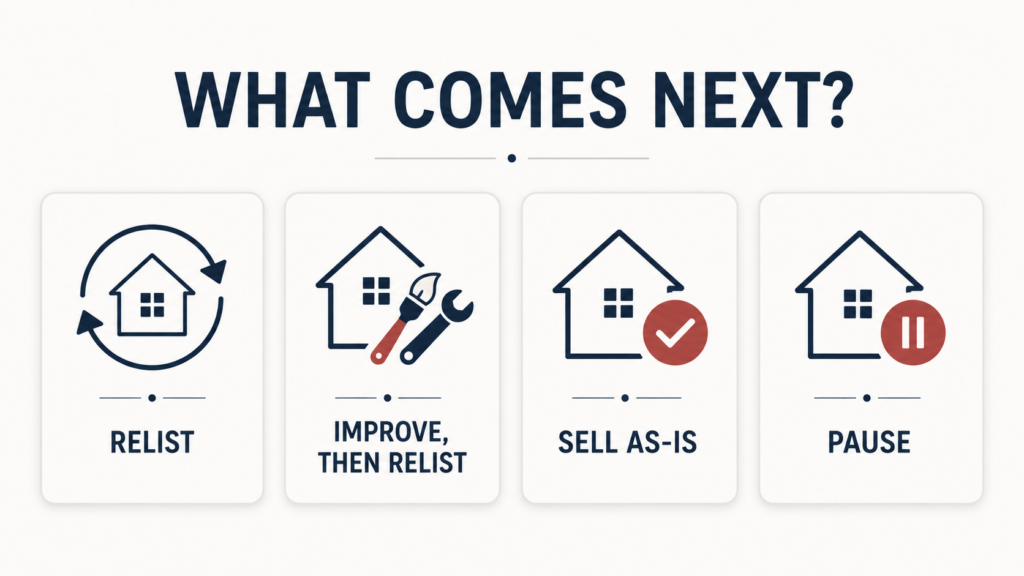
Through my work in Charlotte-area real estate and direct home purchases, I have seen that an expired listing rarely leaves a homeowner with only one option. This guide will help you compare four possible paths:
- Relist the home with a different strategy.
- Make selected improvements and then relist.
- Sell the home as-is, either on the open market or directly to a buyer.
- Pause the sale for now.
There is no single answer that is right for every homeowner. The goal is not to choose the fastest option or the one with the highest advertised price. It is to identify the option that best supports your financial and personal priorities.
Start With the Reason You Wanted to Sell
An expired listing ends the listing agreement. It does not resolve the reason you originally decided to move.
Ask yourself:
- Do I still want or need to sell?
- Is there a date by which I need to move or close?
- Does my next housing decision depend on this home selling?
- Can I comfortably carry the home for another three to six months?
- Am I prepared for more showings, negotiations, inspections, and uncertainty?
- Has anything changed financially, personally, or with the property since it was listed?
If the original reason for selling is no longer important, pausing may be reasonable. If the move still needs to happen, the question is not simply whether to relist. It is which selling method best supports your priorities now.
Review What Happened During the Listing
A listing can expire for more than one reason. Price matters, but it is not the only factor.
Gather the facts from your previous listing:
- Original and final asking prices
- Total days on the market
- Number of showings
- Showing feedback
- Open-house activity
- Offers received and why they did not come together
- Repairs or condition concerns mentioned by buyers
- Comparable homes that sold while yours was listed
- Competing homes buyers could choose instead
- Changes in local inventory, financing conditions, or buyer demand
The pattern of activity may provide useful clues.
Many online views but few showings may indicate that buyers noticed the home but did not see enough value to visit. Several showings without an offer may point to a disconnect involving price, condition, presentation, or buyer confidence. Very little exposure may raise questions about marketing, photography, or access.
These are signals, not automatic conclusions. A Ballantyne home should be reviewed against the competing homes and recent sales that buyers are considering now, not only the market that existed when it was first listed.
Decide How Much More You Want to Put Into the Sale
Preparing for another listing can involve more than choosing a new agent and changing the price.
Consider whether you are willing and able to:
- Make repairs or improvements
- Declutter, clean, or remove unwanted belongings
- Stage the home or change its presentation
- Allow new photography, appointments, and open houses
- Keep the home ready for showings
- Wait through a buyer’s financing, appraisal, and inspection periods
- Negotiate repairs or seller concessions
- Continue paying the mortgage, taxes, insurance, utilities, maintenance, and other carrying costs
You do not have to make every improvement buyers might prefer. Some repairs protect the property or reduce uncertainty. Others may not return what they cost. The important question is whether a specific expense is likely to improve your selling outcome enough to justify the money, time, and effort.
Compare the Four Main Paths
Option 1: Relist With a Different Strategy
Relisting may make sense when the home is likely to perform well with better pricing, presentation, access, or marketing.
This path may fit when:
- Maximizing market exposure is a high priority.
- You have enough time for another listing period.
- The property can compete in its current condition or with manageable preparation.
- You are willing to accommodate showings and the traditional contract process.
- The probable open-market net supports your next move.
Relisting should involve more than changing the photos or reducing the price. A meaningful relaunch starts with an honest review of the previous results and a clear plan for what will be different.
Option 2: Make Selected Improvements, Then Relist
Some homes lose buyer confidence because of visible repairs, unfinished projects, dated finishes, or uncertainty about larger systems.
Improvements may be worth considering when:
- A limited number of issues are affecting the home’s presentation or saleability.
- You have the funds and time to complete the work.
- The expected improvement in price or marketability justifies the cost.
- The work can be completed reliably before relisting.
Avoid assuming that every dollar spent will be recovered. Focus on work that addresses active problems, removes clear buyer objections, or materially improves the home’s first impression.
Option 3: Sell As-Is
Selling as-is generally means offering the property in its current condition without committing in advance to make repairs. It does not necessarily eliminate inspections, negotiations, disclosures, or every seller responsibility. The contract determines what each party has agreed to do.
There are two different as-is paths to consider.
Sell as-is on the open market: The property is exposed to buyers through a real estate listing, but the seller does not plan to complete repairs. This may create broader competition, although the sale can still involve showings, financing, appraisal, inspections, and negotiation.
Sell directly to a buyer: The homeowner sells directly to a company or individual buyer. A direct sale may reduce preparation and provide a more predictable schedule, but the offer may be lower than a potential retail sale price because the buyer is accounting for the property’s condition, risk, resale costs, and the convenience being provided.
A direct sale may deserve consideration when:
- You do not want to prepare the home for another listing.
- The property needs repairs or contains unwanted belongings.
- Privacy, convenience, or timing matters more than maximum market exposure.
- You want to reduce the number of parties or contingencies involved.
- You need a clearer closing schedule.
Convenience has value, but it also has a price. That tradeoff should be visible before you decide.
Option 4: Pause the Sale
You may decide not to sell immediately.
Pausing may be reasonable when:
- The original reason for moving has changed.
- The expected proceeds do not support your next step.
- You need time to complete repairs or organize the property.
- Carrying the home is manageable.
- You are comfortable with the possibility that market conditions may improve or worsen.
Waiting is not cost-free. Calculate what it will cost to own the property for another 30, 60, 90, or 180 days. Include more than the mortgage payment.
Compare the True Net, Not Just the Headline Price
An MLS list price and a direct cash offer are not directly comparable. One is a marketing position; the other is a proposed purchase price with specific terms.
For each realistic option, estimate:
- Probable sale price
- Repair and preparation expenses
- Brokerage compensation, if applicable
- Seller concessions
- Closing expenses
- Mortgage and other liens to be paid
- Property taxes or assessments
- Carrying costs through the expected closing date
- Moving, cleanout, or storage expenses
- Possible inspection-related negotiations
- The likelihood and consequences of an appraisal or financing problem
- Estimated net proceeds
For an initial planning comparison, you might use 6% of the sale price as an illustrative brokerage-compensation assumption. This is only an estimate. Brokerage fees and any seller-paid buyer-agent compensation are negotiable and are not set by law. Actual compensation depends on the seller’s written agreement and the terms of the transaction.
Then compare the nonfinancial factors:
- Time until closing
- Number of showings
- Work required from you
- Certainty of the offer and closing
- Flexibility on the closing date
- What happens if the transaction does not close
The highest stated price is not always the strongest net outcome. At the same time, the simplest offer is not automatically the best financial decision.
Questions to Ask Before Accepting Any Direct Offer
If you are considering a cash or direct offer after your listing expires, ask:
- Who is the actual buyer named in the contract?
- Is the buyer purchasing the property or planning to assign the contract?
- Can the buyer provide evidence of available funds?
- Is the price fixed, or can it be reduced after an inspection or walkthrough?
- What due-diligence, inspection, financing, or cancellation rights does the buyer have?
- Is earnest money or a due-diligence fee being offered?
- Are there service fees or other deductions from the purchase price?
- Who pays the customary closing expenses?
- Is the closing date firm, and can it be adjusted if needed?
- What items may remain in the property?
- What happens if the buyer does not close?
- Is anyone representing me in this transaction?
Do not rely only on statements such as “no fees,” “as-is,” or “guaranteed closing.” Read the actual agreement and make sure its terms match what you were told.
Your Expired Listing Decision Checklist
Before choosing your next step, work through these ten points:
- Need to sell: I know whether I still need or want to sell.
- Timeline: I understand my preferred and latest acceptable timeline.
- Past listing review: I have reviewed the pricing, activity, feedback, and offers from the previous listing.
- Market comparison: I understand how my home compares with current competition and recent sales.
- Repairs and preparation: I know which repairs or preparation would be required for another listing.
- Carrying costs: I have calculated my monthly cost of continuing to own the property.
- Net proceeds: I have estimated the net proceeds for each realistic selling option.
- Selling experience: I have compared the time, work, uncertainty, and risk involved in each option.
- Offer terms: I understand the terms, not just the price, of any direct offer.
- Roles and interests: I know who is involved, whom each person represents, and how each person or company may benefit from the transaction.
If you cannot answer several of these questions yet, you may not need another sales pitch. You need better information.
Frequently Asked Questions
What should I do when my Ballantyne home listing expires?
Start by reviewing why you still want to sell, what happened during the listing, how the home compares with current Ballantyne competition and recent sales, and what another sale attempt would require. Then compare relisting, making selected improvements, selling as-is, requesting a direct offer, and pausing the sale.
Is selling a home as-is the same as accepting a cash offer?
No. A home can be marketed and sold as-is through the MLS, or it can be sold directly to a cash buyer. The potential price, preparation, showings, contingencies, timing, and certainty may differ between those options.
Should I lower the price when I relist an expired listing?
Not automatically. Price should be reviewed along with the home’s condition, presentation, showing activity, buyer feedback, competing listings, recent sales, and changes in the local market.
What should I ask a cash buyer after my listing expires?
Ask who will purchase the property, whether the contract may be assigned, whether the buyer can show available funds, whether the price can change, what cancellation rights the buyer has, what costs will be deducted, and what happens if the buyer does not close.
When could pausing the sale make sense?
Pausing may deserve consideration when your reason for moving has changed, the probable proceeds do not support your next step, or you need more time to prepare. Compare that choice with the full cost and risk of continuing to own the property.
Should You Consider a Direct Purchase From JMS Home Buyers?
JMS Home Buyers is a local cash home buyer serving Ballantyne and the greater Charlotte area. JMS purchases properties directly. If JMS Home Buyers makes an offer, JMS is acting as the prospective buyer, not as your real estate agent, and is seeking to purchase the property for its own benefit. JMS Home Buyers does not assign its purchase contracts.
A direct purchase will not be the right fit for every homeowner. Some sellers may receive a stronger outcome by relisting, completing selected improvements, or offering the property as-is on the open market. Homeowners should compare their alternatives and may choose to obtain independent real estate, legal, tax, or financial advice before signing an agreement.
If your Ballantyne home listing expired and you want to know whether a direct sale belongs among your options, JMS Home Buyers can review the property, its condition, and your preferred timeline. Any offer should be evaluated by its expected net proceeds, terms, convenience, and certainty, not by the purchase price alone.
Request a no-obligation property review from JMS Home Buyers.
Written by Jody Christensen, a licensed real estate broker and owner/manager of JMS Home Buyers.